Planfit Logo
  • Exercises
  • Community
  • Blog
  • Sign in
Planfit Logo

Copyright ⓒ 2026 Planfit Inc.

InstagramReddit
Exercise Guide
AI Workout Generator
Free Workout Plans
Privacy policy
Terms of Use
Blog
Planfit Logo
  • Exercises
  • Community
  • Blog
  • Sign in

Kettlebell Swing

Full body complex
Kettlebell Swing gif

About

The movement of the hip joint is the core of the movement of the kettlebell back and forth. It strengthens the core, has cardio effects, and it also enhances your physical strength!

How to Kettlebell Swing

Starting Position

1. Please stand shoulder-width apart.

2. With the kettlebell in hand, push your hips back and lean your upper body forward.

3. Keep your chest up and your back straight.

4. The kettlebell should be positioned between your legs.

Proper Form

1. Hold the kettlebell with both hands and spread your feet wider than shoulder-width with your toes pointing outward.

2. Raise the kettlebell to shoulder height, then naturally push your hips back and bend your knees to bring the kettlebell between your legs.

3. Momentarily contract your hips while straightening your knees to raise the kettlebell back to shoulder height.

4. Keep your arms in a straight line and repeat the movement.

Breathing Technique

Inhale while lowering the kettlebell and exhale while raising the kettlebell.

Precautions

The role of the hips and core is very important in exercise. Just by moving the hips back and forth while engaging the core, the movement can become more natural.

From the Community

Kettlebell Swing Community

Join the Community →
Kettlebell Swing Related Reading

  • Workout duration doesn't predict muscle growth — sets do, per a 2020 meta-analysis of 111 studies
    Numbers Don't Lie

    Workout duration doesn't predict muscle growth — sets do, per a 2020 meta-analysis of 111 studies

    Stop watching the clock. Muscle growth comes down to sets per workout, not minutes on the floor — according to a 2020 meta-analysis of 111 studies.

  • RPE vs RIR: the number that tells you exactly how hard to push — backed by 4 RCTs
    Numbers Don't Lie

    RPE vs RIR: the number that tells you exactly how hard to push — backed by 4 RCTs

    RPE and RIR are two ways to measure effort in real time. Here's what 4 RCTs say about which one works, when, and for whom.

  • Sets per workout is the only training variable that reliably predicts muscle growth.
    Numbers Don't Lie

    Sets per workout is the only training variable that reliably predicts muscle growth.

    Wondering how many sets per workout you actually need? The answer is simpler than you think — according to a 2020 meta-analysis of 111 studies.

  • 3 days a week is enough — and a J Strength Cond Res RCT of 32 athletes proves it works
    Numbers Don't Lie

    3 days a week is enough — and a J Strength Cond Res RCT of 32 athletes proves it works

    Wondering how many days a week to work out? 3 sessions gets the job done — per an RCT in J Strength Cond Res and exercise guideline reviews.

  • Soreness is not a measure of muscle growth.
    Myths Busted

    Soreness is not a measure of muscle growth.

    Feeling wrecked after leg day doesn't mean you're building more muscle. Here's what the science actually says — including a 2026 meta-analysis of 49 studies.

  • 3 minutes beats 1 minute — and the data on rest periods is clearer than you think.
    Numbers Don't Lie

    3 minutes beats 1 minute — and the data on rest periods is clearer than you think.

    Resting longer between sets builds more strength and likely more muscle. Here's exactly how long to rest, according to a 2024 Bayesian meta-analysis and two RCTs.

Curious about a Core workout plan that includes the Kettlebell Swing

Kettlebell Swing Alternatives

Plank

Plank

Reverse Plank

Reverse Plank

More

Kettlebell Swing vs

  • Kettlebell Swing vs Leg Raise
  • Kettlebell Swing vs Crunch
  • Kettlebell Swing vs Cable Crunch

Get Personalized Plans
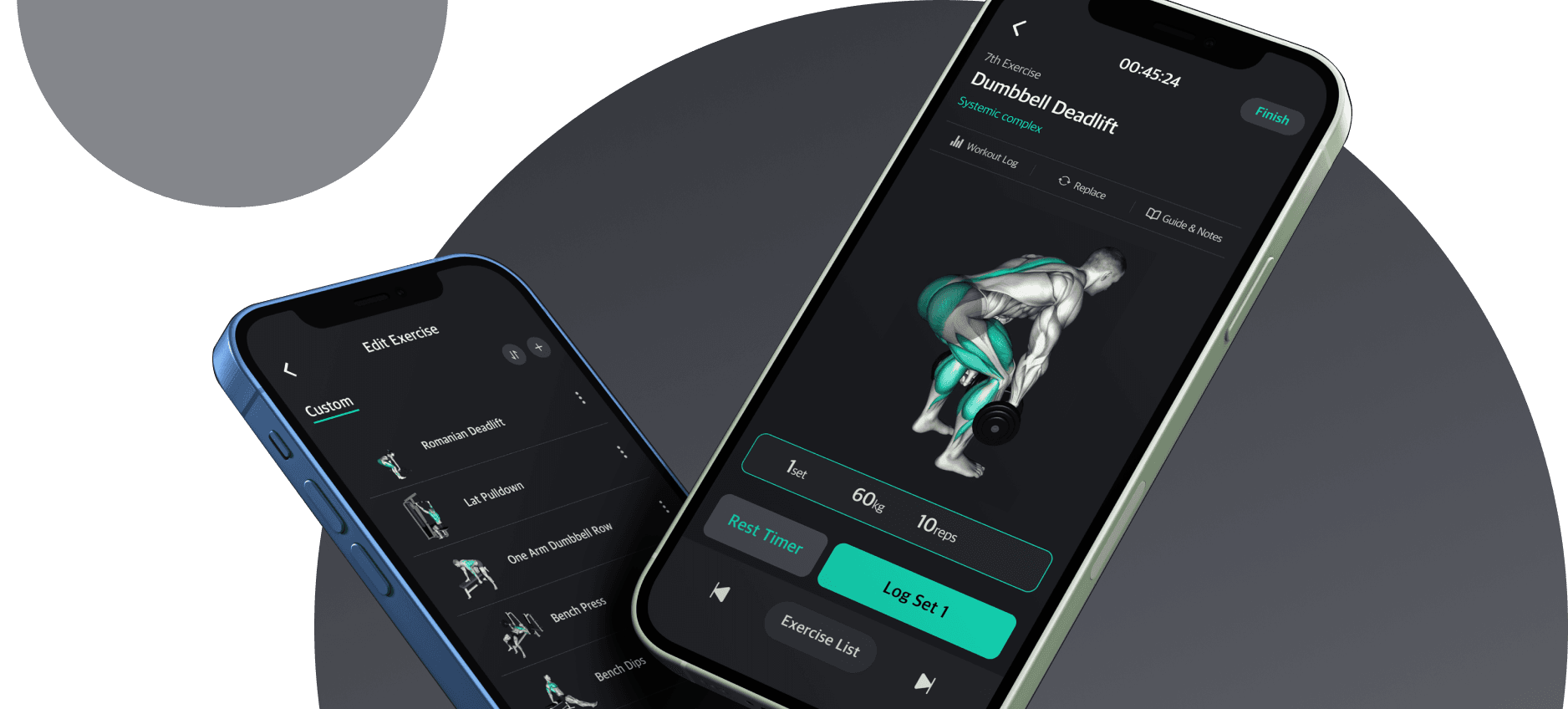
and More detailed guidance with Planfit
Banner Image
Planfit Logo

Copyright ⓒ 2026 Planfit Inc.

InstagramReddit
Exercise Guide
AI Workout Generator
Free Workout Plans
Privacy policy
Terms of Use
Blog